PURPOSE 2 Trial Confirms High Efficacy of Subcutaneous Lenacapavir for HIV Pre-Exposure Prophylaxis (PrEP)
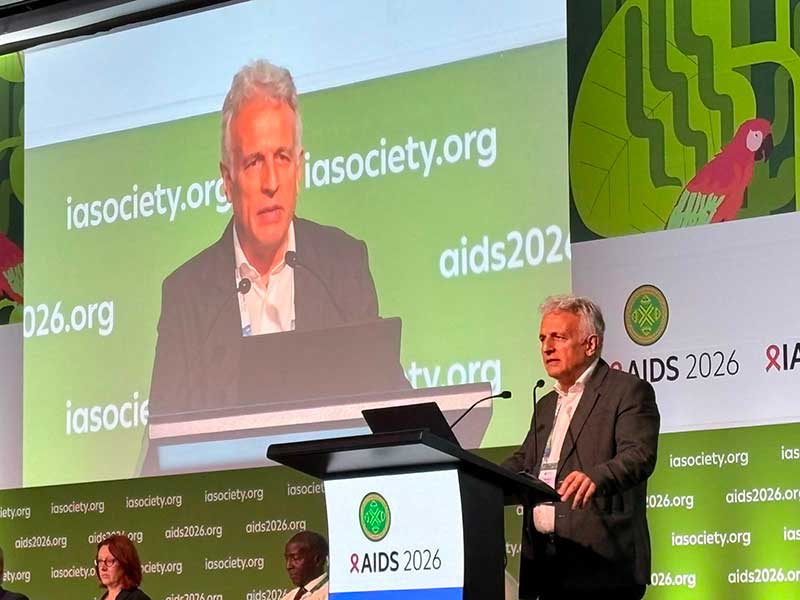
«RIO DE JANEIRO, Brazil. At the 26th International Conference on Acquired Immunodeficiency Syndrome, it was reported that the biannually administered subcutaneous lenacapavir regimen demonstrated efficacy and sustained safety within the open-label extension phase of the PURPOSE 2 clinical trial for human immunodeficiency virus pre-exposure prophylaxis. Dr. Marcelo H. Losso The results were presented by Dr. Marcelo H. Losso, Head of the Section of Emerging Diseases, Immunocompromised Patients, and Sexual Health Clinic at the Ramos Mejía Hospital in Buenos Aires, Argentina, representing the international team of investigators from Argentina, Brazil, the United States, Mexico, Peru, Thailand, and South Africa. 52 weeks of follow-up In the trial, biannual lenacapavir had previously demonstrated superior efficacy compared to daily oral emtricitabine/tenofovir disoproxil fumarate in cisgender men and gender-diverse individuals who have sex with men. In the 52-week extension of this randomized, double-blind study, participants were offered the option to continue if they were in the lenacapavir group or switch to it if they were in the oral pharmacological treatment group. The original study comparing this strategy with the standard of daily pills had already demonstrated superiority. The extension confirms the efficacy of this drug in preventing human immunodeficiency virus infection in populations at increased risk of infection. “In this case, these are men who have sex with men, transgender women, and non-binary individuals who have sex with men. In this population, the possibility of transmission decreases significantly with the use of lenacapavir every six months,” stated the specialist. Improved tolerability Dr. Losso emphasized that adherence to receiving the new lenacapavir injections during that additional year was very high: 96% and 92% at weeks 26 and 52, respectively, among participants who switched from emtricitabine/tenofovir disoproxil fumarate. Furthermore, he highlighted that there were no new safety signals, systemic adverse effects, or resurgence of other viruses. “Tolerability to adverse effects was within the range of what had already been observed,” he noted, referring to the appearance of injection site pain and transient subcutaneous nodules. In this regard, he added that during the first part of the study, subcutaneous administration was only explored in the abdomen, but in the extension phase, volunteers could choose the administration site. “Those sometimes painful nodules are associated with abdominal administration. Sites other than the abdomen generate much better tolerability.” Extraordinary, but not infallible During that additional year of the PURPOSE 2 study, there was one case of human immunodeficiency virus infection. “Just one among this large number of patients, which confirms the extraordinary efficacy of the therapy.” Since the beginning of the trial, there have been four human immunodeficiency virus infections among participants receiving lenacapavir across 5,295 person-years (PY) of follow-up (incidence: 0.08/100 PY; 95% confidence interval [95% CI]: 0.02 to 0.19); three occurred during the initial study and one in the extension phase. To date, there is no explanation for why they might have occurred. “The participant who acquired human immunodeficiency virus during the extension phase received all lenacapavir injections on time and the plasma drug level was adequate. Nor is there any characteristic of this individual that suggests a potential explanation to eventually resolve, but it must be pointed out that these are very rare phenomena,” he highlighted. A mutation linked to exposure to this antiviral was detected in the viruses infecting those patients. It is known that these individuals were not infected by a resistant strain circulating in the community, but rather developed resistance upon becoming infected while receiving the drug. “In those patients, it limits the use of that specific drug, but there are many other antiviral drugs to which the virus remains susceptible.” Pursuing a population-level effect Cabotegravir is administered every two months via intramuscular injection instead of every six months subcutaneously; the investigator is unaware whether comparative studies with this drug are planned. He estimated that both drugs can find their place, considering their technical aspects and the characteristics, procurement mechanisms, and negotiations of each jurisdiction. “Honestly, there is such a great need for access that being restrictive in this regard does not help. Rather, we must think that it is necessary to greatly expand pre-exposure prophylaxis so that, in addition to individual benefit, it achieves a population-level effect, which is what we desire. This should be achieved when a significant number of people at risk are taking this therapy, which has not yet happened anywhere.” Dr. Losso considered that long-acting pre-exposure prophylaxis represents a paradigmatic shift. Consequently, he noted that the public health strategy to expand it—regardless of the modality—is even more justified. “Efforts must be made to figure out how, within a rational framework of resource utilization, we will deliver these innovations to the people who need them.” Spain was the first European country to fund and introduce this drug, and it has been approved for pre-exposure prophylaxis by the European Union. In Latin America, it is only approved in Brazil, where access is not yet guaranteed. The expert added that approval is imminent in Mexico and Peru, and mentioned filing plans in Argentina and other countries in the region. Is a vaccine still needed? The results obtained with pre-exposure prophylaxis raise questions about the extent to which it remains necessary to develop a vaccine against the human immunodeficiency virus, efforts for which have spanned decades; only now do preclinical advances appear to be emerging. The specialist added that keeping the vaccine issue on the agenda remains essential and that investment in this search must be significant because antivirals require permanent administration, as protection depends on the continuous presence of the drug. “One thing does not replace the other; it is necessary to have all tools on the table, and vaccination will surely carry a lower cost than antiviral drugs.” Read also: Pre-exposure prophylaxis with lenacapavir has no significant interactions with hormonal contraceptives or gender-affirming hormone therapy. Dr. Losso has received research grants from Gilead Sciences, Inc. and ViiV Healthcare through the IBIS Foundation and Ramos Mejía Hospital. Gilead Sciences, Inc. funded and supervised the study, and collected and analyzed the data.» Fuente: